Damp Lawn, Cracked Pepper, Olive Oil: What's Really Behind Your CBD Oil's Flavour
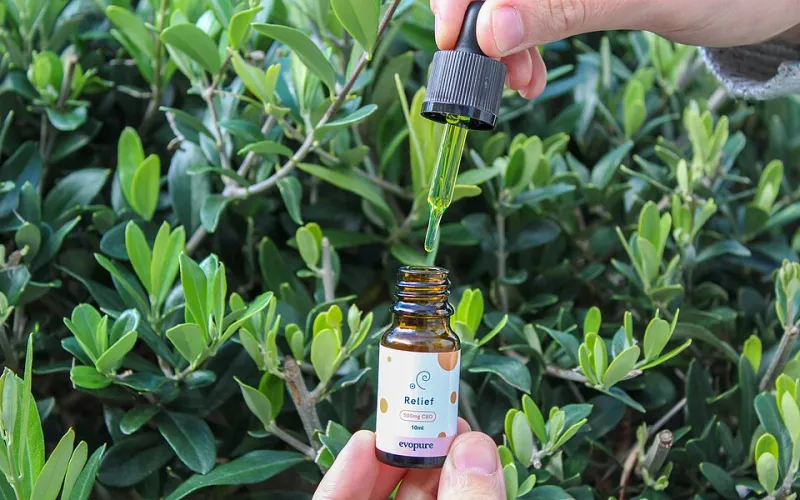
Photo: Evopure, CC BY-SA 2.0, via Wikimedia Commons
You finally get the dropper under your tongue, and instead of something neutral you get a mouthful of damp lawn, cracked black pepper, or the ghost of a salad dressing. It's not the most glamorous introduction to CBD. But that flavour is rarely a fault. Most of the time it's simply a combination of what the oil is suspended in and the plant compounds that came along for the ride.
This is a plain-English guide to what you're actually tasting, why two bottles at the same strength can taste wildly different, and how to choose something you'll happily finish rather than leave at the back of the cupboard.
The CBD bit is barely doing the talking
Here's a useful starting point: CBD itself doesn't taste of much. If you bought a pure CBD isolate, you'd get a faintly bitter, almost nothing-y experience. The flavour comes from everything else in the bottle.
With full-spectrum or broad-spectrum extracts, you're getting other naturally occurring cannabinoids, terpenes and flavonoids from the hemp plant. Those are the compounds responsible for the grassy, earthy, sometimes citrusy or piney notes. The more of that plant material a product retains, the more character it tends to have. That's not a flaw — it's just a different style of extract.
Your carrier oil is half the story
CBD has to live in something, and that something is usually a carrier oil. This is often the biggest factor in how a bottle tastes.
MCT oil — usually derived from coconut — is the most common choice for tinctures. It's light, slightly creamy and fairly neutral. If you're sensitive to flavour, this is often the least intrusive option.
Hemp seed oil is nutty, grassy and distinctly plant-like. It's popular in so-called raw or whole-plant products. It can taste lovely, but it also goes off more quickly than MCT, and old hemp seed oil has a slightly bitter, stale note that no amount of peppermint flavouring will hide.
Olive oil brings a peppery, fruity warmth. Some people love it; others find it dominates everything else. If your bottle tastes like a nice loaf dipped in extra virgin, that's why.
Sunflower and other oils turn up too, usually in cheaper products. They're not automatically bad, but they can taste heavier and less clean than MCT.
Terpenes are the plant's own seasoning
Terpenes are the aromatic compounds that give plants their smell — and in hemp, they can read as pine, citrus, earth, pepper or even floral notes. Levels vary by plant variety, growing conditions and how the extract was made. That's one reason two bottles of the same strength can taste completely different. It's also why a product can taste grassy one month and slightly different the next. Batch variation is normal in a plant-based product.
The strength myth worth binning
There's a stubborn assumption that a harsher, stronger-tasting oil must be more potent. It isn't that simple. A high-strength CBD isolate in MCT oil can taste almost of nothing. A mild full-spectrum product can taste like a garden centre. The grimace factor tells you about extract style and carrier oil, not milligrams.
What actually matters is on the label: how many milligrams of CBD are in the bottle, how many per millilitre, what the carrier oil is, and whether there's a batch number and best-before date. If a product is vague about any of that, the flavour is the least of your worries.
Why your new bottle tastes different from the last one
A few ordinary things can shift the taste:
- A change of carrier oil or extract type between batches
- Natural batch-to-batch variation in the plant material
- Storage — light and heat speed up oxidation, especially in hemp seed oil
- Age — an old bottle can taste flatter, sharper or just a bit sad
If a bottle tastes dramatically different from how it used to, check the batch date and whether the formula has changed. If it smells rancid or downright unpleasant, don't force it.
Making the daily drop less of a chore
If you've found a product that works for you but you dread the taste, try a few practical tweaks:
- Keep it cool. A bottle stored in the fridge is slightly less pungent. Just check the label for any storage instructions first.
- Aim for under the tongue, not the front of the mouth. The idea is to hold it for a minute or so before swallowing. The taste buds at the front are the most sensitive, so a steady hand helps.
- Have a chaser ready. Water, a plain biscuit or a bite of something bland takes the edge off. Strong coffee or juice tends to make the aftertaste more dramatic, not less.
- Choose a lighter carrier oil. If flavour is your sticking point, an MCT-based product is usually the easiest place to start.
- Don't force a full dropper. Adjust your serving to something manageable. A smaller amount you'll actually take consistently beats a heroic dose you avoid.
- Try it in food if holding it isn't for you. Stirring a serving into yoghurt or a smoothie changes how it's absorbed, but it's a perfectly practical way to use it. Just don't bung it into a boiling hot drink and expect the label to still mean much.
A quick label checklist
Before you buy, look for: the carrier oil named clearly; CBD content in milligrams per millilitre and per bottle; a batch or lot number; a best-before date; and some indication of how it was extracted. If the bottle shouts about strength but says nothing about what's in it, put it back.
The bottom line
CBD oil tastes the way it does because of the carrier oil, the plant compounds and the style of extract — not because it's stronger or better. A pleasant, mild flavour is not a sign of a weak product, and a challenging one is not a badge of quality. The best bottle is the one you'll use consistently. If you're grimacing every morning, you've simply got the wrong one for you.